
Coops That Work Through Winter
Chicken Coop Building in Belgrade for backyard flocks facing predator pressure and significant winter temperature drops
Warm-climate kit coops sold online are not built for Montana's predator pressure or winter temperature swings, leading to predator breaches and frostbite losses during the first hard freeze. Anderson Fencing Solutions builds custom predator-proof chicken coops for rural and semi-rural properties across Belgrade, Manhattan, and Big Timber, designing structures around the specific conditions that affect Gallatin Valley flocks. Coops here need hardware cloth rather than chicken wire to stop predators, insulation and ventilation balanced to prevent frostbite without trapping moisture, and structural framing that supports snow loads without collapsing during heavy accumulation events.
Coop construction involves predator-proofing that extends below ground to stop digging animals, ventilation systems that remove moisture without creating drafts at roost height, and insulation strategies that moderate temperature extremes while preventing condensation buildup. These decisions are made during the design phase based on flock size, property predator activity, and whether the coop will house birds year-round or only during warmer months.
Schedule a consultation to review predator-proofing and insulation specifications for your property and flock size.
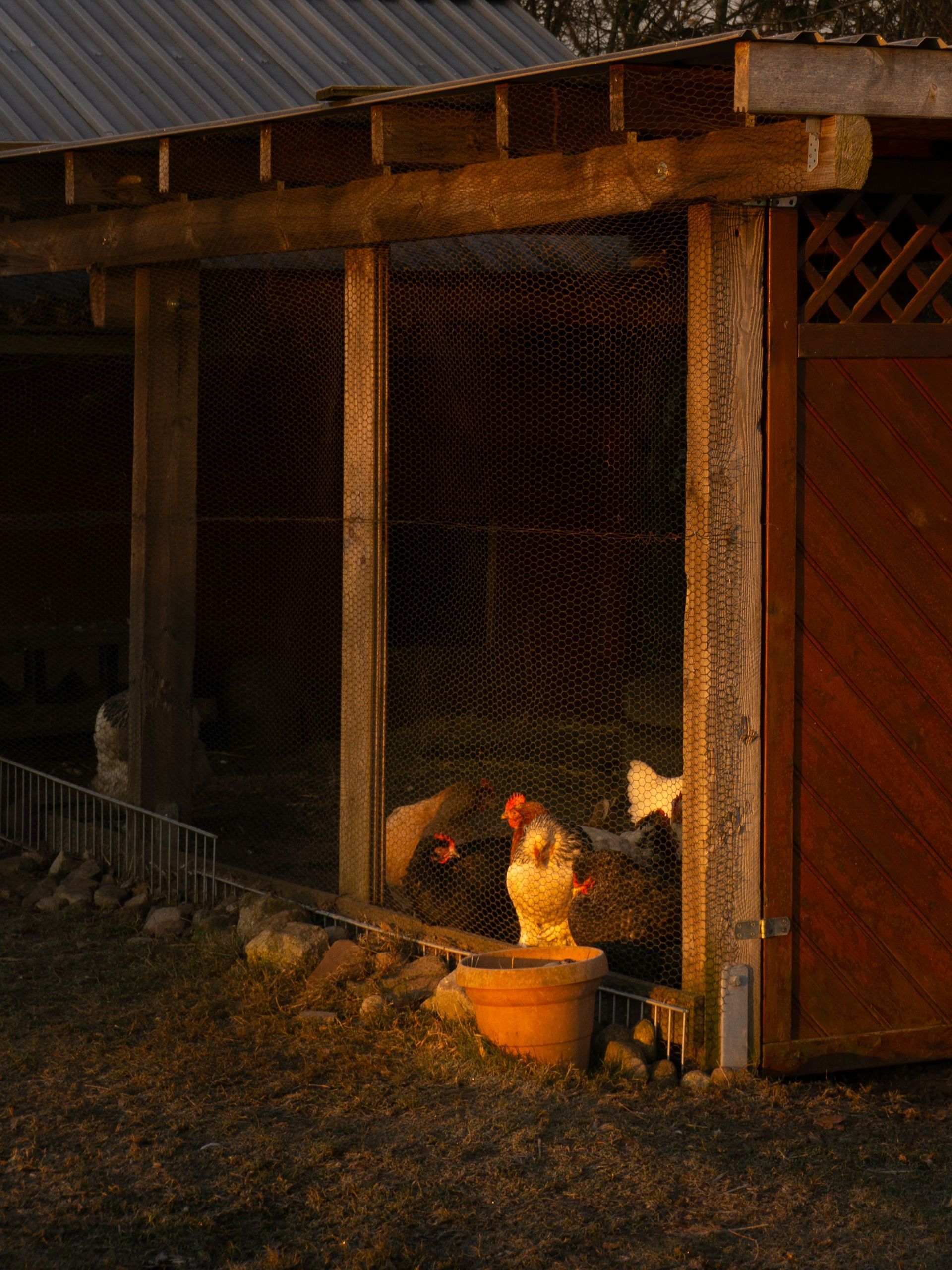
What Predator-Proof Construction Actually Requires
Predator-proofing in Montana means hardware cloth with half-inch or smaller openings on all ventilation areas and floor sections, with mesh extending at least 12 inches below ground or laid horizontally as an apron to stop digging predators. Door and access panel gaps must be minimized with tight-fitting hardware, while roof structures need adequate strength to prevent large predators from breaking through during attempted entries. Insulation decisions balance warmth against moisture management, using materials that moderate temperature swings without creating condensation that leads to frostbite on combs and wattles.
After construction, you will notice flocks that remain secure from raccoons, weasels, and other predators common in agricultural communities, interior temperatures that stay above freezing during cold snaps without supplemental heat, and dry bedding that does not develop the moisture problems seen in poorly ventilated coops. Birds housed in properly designed coops maintain egg production longer into winter and experience fewer cold-stress losses during temperature extremes.
Flock size determines interior square footage and roost length, while egg production goals affect nesting box quantity and access design for daily collection. Some property owners need coops sized for future flock expansion, while others require mobile designs that allow pasture rotation or structures integrated with existing outbuildings and garden layouts.
Questions Before Starting Your Project
Backyard flock owners frequently ask about predator-proofing effectiveness, insulation needs for Montana winters, and whether kit coops can be modified to work in this climate or if custom construction is necessary.
What predators threaten backyard flocks in the Gallatin Valley?
Raccoons, weasels, foxes, hawks, and occasionally bears all pose threats to backyard flocks, with raccoons and weasels responsible for the majority of coop breaches due to their ability to exploit small gaps and weak points in hardware cloth installation or door sealing.
How much insulation do chicken coops need in Belgrade?
Coops benefit from R-13 to R-19 wall insulation to moderate temperature extremes, but insulation must be paired with adequate ventilation to remove moisture from respiration and droppings, preventing the humidity buildup that causes frostbite even in insulated structures.
What is the difference between hardware cloth and chicken wire for predator protection?
Hardware cloth uses welded wire with half-inch or quarter-inch openings that predators cannot tear or spread apart, while chicken wire uses twisted wire with larger openings that raccoons and other predators easily breach by pulling apart the wire or tearing through weak points.
When is the best time to build a chicken coop?
Spring through early fall provides the best construction window, allowing you to establish your flock and observe coop performance during moderate weather before winter conditions test insulation, ventilation, and predator-proofing effectiveness.
How large does a coop need to be for a typical backyard flock?
Coops require minimum four square feet per bird for interior space plus 10 square feet per bird in attached run area, with additional space improving flock health and reducing aggression during winter months when birds spend more time inside the structure.
Anderson Fencing Solutions builds
chicken coops for backyard flocks across Belgrade and surrounding agricultural communities, using predator-proofing and insulation methods designed for Montana's conditions. Arrange a property visit to discuss coop sizing, predator pressure, and construction options for your flock requirements.